
Khorfakkan Customs Clearance: Complete Guide to Import & Cargo Processing in UAE
March 12, 2026. C4CUSTOMS
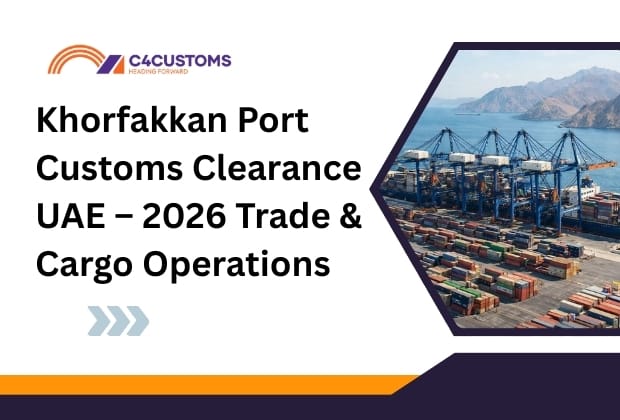
The United Arab Emirates is one of the world’s most important logistics hubs, connecting trade routes between Asia, Europe, and Africa. Among the country’s major cargo gateways, Khorfakkan Port has become a strategic entry point for international shipments entering the UAE and the wider GCC region.
Located on the eastern coastline of the UAE along the Gulf of Oman, Khorfakkan Port provides direct access to global shipping lanes without requiring vessels to pass through the Strait of Hormuz. This geographic advantage allows shipping companies to reduce transit times and avoid congestion.
However, efficient cargo movement through the port depends on professional customs clearance procedures. Importers must comply with UAE customs regulations, prepare accurate documentation, pay applicable duties, and coordinate inspections before cargo can be released.
This guide explains the complete process of customs clearance in Khorfakkan Port, including documentation requirements, clearance procedures, duties, and how professional customs brokers help businesses move shipments efficiently.
Why Khorfakkan Port Is Important for UAE Trade
Khorfakkan Port has grown significantly over the last decade and is now considered one of the most advanced container terminals in the region.
Its strategic location allows vessels to operate directly along international shipping routes connecting Asia, Africa, and Europe.
Key advantages of Khorfakkan Port include:
• Direct access to international shipping lanes
• Reduced vessel congestion compared to other ports
• Faster cargo transshipment operations
• Efficient road connectivity to major UAE cities
• Strategic gateway for GCC cargo distribution
Because of these benefits, many global shipping lines use Khorfakkan as a transshipment hub and a cargo entry point into the UAE logistics network.
For importers and exporters, this means faster cargo handling and improved supply chain efficiency.
Khorfakkan Customs Clearance Process – Step by Step
All cargo arriving at Khorfakkan Port must complete UAE customs clearance before entering the local market or being transported to other GCC countries.
Below is the typical clearance process followed by customs brokers.
1. Import Code Registration
Before importing cargo into the UAE, businesses must obtain a Customs Import Code from the relevant customs authority.
This code allows companies to submit import declarations and process shipments through the UAE customs system.
Without an import code, customs declarations cannot be submitted.
2. Preparing Shipment Documentation
Accurate documentation is essential for fast customs clearance. Missing or incorrect documents can delay shipments and lead to additional storage charges.
Typical import documents include:
Commercial Invoice
Packing List
Bill of Lading
Certificate of Origin
Importer Trade License
Customs Import Code
HS Code Classification
Delivery Order from Shipping Line
These documents must match shipment details exactly.
3. HS Code Classification
Every product imported into the UAE must be declared using the Harmonized System (HS) Code.
The UAE follows a 12-digit HS classification system used to determine:
• Customs duty rate
• Import restrictions
• Regulatory approvals
• Statistical tracking of trade
Incorrect HS coding can cause delays or customs penalties.
4. Submitting Customs Declaration
Once documentation is prepared, the customs declaration is submitted through the UAE’s digital customs platform.
Customs brokers upload shipment data including:
• Cargo description
• HS codes
• Invoice value
• Shipping details
• Importer information
After submission, the customs authority reviews the declaration.
5. Duty and Tax Payment
Most imported goods entering the UAE are subject to a standard customs duty of 5% of CIF value (Cost + Insurance + Freight).
Some goods may also require:
• Municipality fees
• Port handling charges
• Inspection fees
• Storage charges if delayed
Once duties are paid, customs can proceed to the next stage.
6. Cargo Inspection
Certain shipments may require physical inspection by customs officers.
Inspection verifies:
• Cargo description
• Quantity and packaging
• Compliance with UAE import regulations
• Safety standards and certifications
Some restricted goods may also require approval from government authorities.
7. Cargo Release
After inspection and duty payment, customs issues the cargo release order.
The shipment can then be:
• Delivered to warehouse facilities
• Transported to distribution centers
• Re-exported to other GCC countries
Efficient coordination ensures cargo leaves the port quickly.
GCC Transit Cargo from Khorfakkan
Khorfakkan Port is not only used for UAE imports but also serves as a transit gateway for cargo moving to other GCC markets.
After customs procedures are completed, shipments can be transported by road to neighboring countries including:
Saudi Arabia
Oman
Qatar
Kuwait
Bahrain
Road freight from Khorfakkan allows businesses to distribute cargo quickly across the Gulf region.
This makes the port an important logistics hub for regional trade.
Benefits of Professional Customs Clearance Services
Handling customs procedures requires expertise in trade regulations, documentation, and digital declaration systems.
Professional customs brokers assist businesses by managing the entire clearance process.
Typical services include:
Import and export customs clearance
HS code classification
Documentation preparation
Duty calculation and payment
Inspection coordination
Port authority communication
Cargo release management
These services help reduce clearance time and avoid costly delays.
Why Choose C4Customs for Khorfakkan Customs Clearance
C4Customs provides reliable customs clearance services for shipments arriving at UAE ports, including Khorfakkan.
Our services include:
Import and export clearance processing
HS code classification and duty calculation
Complete documentation management
Coordination with port and customs authorities
Cargo inspection support
Fast cargo release and delivery coordination
With experienced customs specialists and strong port coordination, shipments move efficiently through UAE customs systems.
Conclusion
Khorfakkan Port continues to grow as one of the UAE’s most important logistics gateways. Its strategic location along global shipping routes makes it a preferred entry point for international cargo entering the region.
However, efficient cargo movement depends on accurate customs documentation, proper duty payment, and compliance with UAE import regulations.
Businesses that work with experienced customs clearance providers can ensure their shipments move smoothly from port arrival to final delivery.
For companies importing cargo through Khorfakkan Port, professional customs clearance services help simplify complex procedures and keep supply chains operating efficiently.
Frequently Asked Questions
Khorfakkan Port is a major UAE container terminal used for cargo imports, exports, and transshipment operations.
Clearance time depends on documentation and inspection requirements, but properly prepared shipments can clear within 1–2 days.
Typical documents include invoice, packing list, bill of lading, certificate of origin, and import code.
Yes, shipments can be transported by road to Saudi Arabia, Oman, Qatar, Kuwait, and Bahrain.
Using a professional customs broker ensures accurate documentation and faster cargo clearance.